

For most travelers, Interstate 10 through Southern Louisiana is a blur of cypress knees, elevated concrete bridges, and the relentless hum of tires against pavement. It is a vital artery, yes, but it is also a bypass-a way to get through Acadiana without ever truly touching it. But what if you took the exit? What if, instead of chasing the speedometer, you chased the scent of simmering roux and the distant squeeze of an accordion?
Welcome to the Cajun Corridor Byway. Stretching along Louisiana Highway 14, this isn’t just a road; it’s a portal. As you drop south from the interstate, the landscape shifts from industrial outskirts to a lush, vibrating tapestry of emerald rice fields, prehistoric marshes, and small towns where French is still whispered in the grocery aisles. This is the “Most Cajun Place on Earth,” a stretch of Vermilion Parish where the culture isn’t a performance for tourists-it’s a way of life that pulses with every beat of a washboard.
If you are tired of the sanitized highway experience and crave a drive that engages all five senses, it’s time to kill the cruise control. The Cajun Corridor is calling, and it’s serving up a side of soul you won’t find at any rest stop.
Fast Facts: The Cajun Corridor at a Glance
- Total Mileage: Approximately 34 miles (from Delcambre to Gueydan), though side trips can easily extend this.
- Recommended Travel Time: 4 to 6 hours for a leisurely “tasting tour,” or a full weekend to truly soak in the atmosphere.
- Best Time of Year to Visit:
- Spring (March-May): Peak crawfish season and mild temperatures.
- Fall (October-November): Festival season, including the iconic Giant Omelette Celebration.
- Primary Route: Louisiana Highway 14.
The Route & Main Stops: A Geographic Walkthrough of Acadiana’s Heart
Cajun Corridor BywayThe beauty of the Cajun Corridor is its linear simplicity. It runs east-to-west, paralleling I-10 but feeling worlds apart. We recommend starting your journey on the eastern edge in Delcambre and heading west toward the setting sun.
Delcambre: The Shrimp Capital’s Salty Embrace
Your journey begins where the marsh meets the sky. Delcambre (pronounced Del-com) is a working-class port town defined by the Bayou Carlin. Here, the air smells of salt spray and diesel.
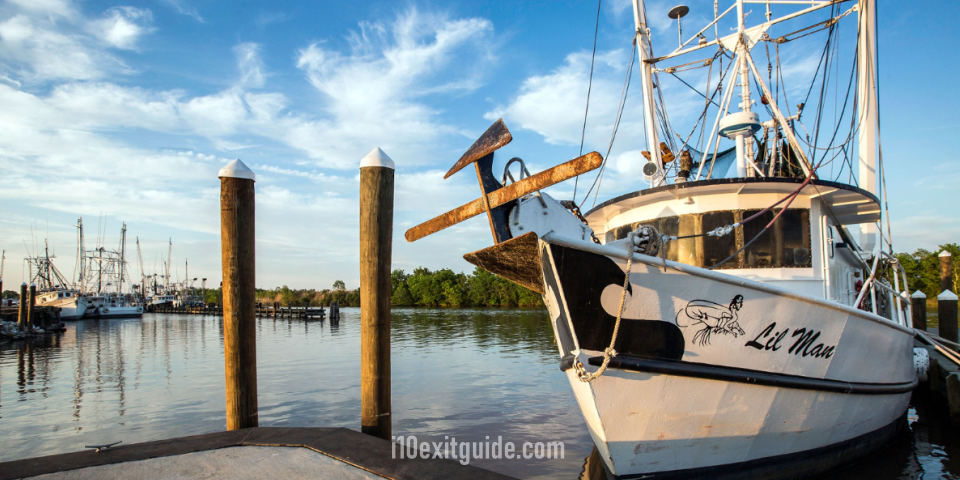
- The Experience: Drive down to the docks to see the “Delcambre Direct” fleet. These are the massive shrimp boats you see in documentaries, with their wide nets draped like lace curtains.
- The Must-Do: If your timing is right, buy shrimp directly off the boat. There is no experience more “Louisiana” than chatting with a captain while he scoops shimmering, translucent shrimp from a bed of ice into your cooler.
Erath: A Lesson in Acadian Resilience
Just a few miles west, you’ll roll into Erath. While small, this town holds the keys to the region’s history.
- The Stop: The Acadian Museum. This isn’t a dusty, boring archive; it’s a passionate tribute to the 1755 expulsion of the Acadians from Canada and their rebirth in the Louisiana wetlands.
- The Vibe: You’ll likely be greeted by a local volunteer who can trace their lineage back eight generations. It’s the perfect place to understand why the culture you’re about to eat and dance through is so fiercely protected.
Abbeville: The Sophisticated Soul of the Corridor
Abbeville is the crown jewel of the byway. It manages to feel both like a bustling European village and a rugged frontier town.
- Magdalen Square: The heart of the city is a lush, oak-shaded plaza anchored by the towering St. Mary Magdalen Catholic Church. It’s the kind of place where you want to turn off the engine, roll down the windows, and just listen to the bells.
- The Culinary Landmark: You cannot pass through Abbeville without stopping at Dupuy’s Seafood & Steak or Shucks!. This is the epicenter of the Gulf oyster. Whether you want them raw and briny or grilled with garlic butter and parmesan, this is where you’ll find the “gold standard” of Louisiana seafood.
Kaplan: The Gateway to the Coastal Wetlands
As you continue west, the trees begin to thin, and the “Big Sky” of the Louisiana prairie takes over. Kaplan is a town that lives by the seasons-planting season, harvest season, and duck season.
- Main Street Magic: Kaplan’s downtown retains a mid-century charm that feels frozen in time. Keep an eye out for the murals depicting the local flora and fauna.
- The Soundscape: If you pass through on a weekend, listen for the sound of live music. Kaplan is a hub for traditional Cajun musicians; it’s not uncommon to find a “jam session” happening in a backyard or a local lounge.
Gueydan: The Duck Capital of America
The western terminus of the byway is Gueydan, a town surrounded by a sea of rice and crawfish ponds.
- The Landscape: This is a photographer’s dream. The reflection of the clouds in the flooded rice fields creates a mirror effect that stretches to the horizon.
- The Wildlife: Even if you aren’t a hunter, the sheer volume of migratory birds-geese, ducks, and ibises-is a breathtaking natural spectacle. It’s the rugged, wild end to a culturally rich journey.
Hidden Gems: Where the Locals Go
To truly experience the Cajun Corridor, you have to be willing to take the “road beside the road.”
Suire’s Grocery & Restaurant (Kaplan):
Located just south of the main highway, this looks like a humble convenience store. Don’t be fooled. Inside, the Suire family serves what many locals consider the best turtle sauce piquante and crawfish étouffée in the state. Their pecan pie is legendary, and the atmosphere is as unpretentious as it gets. It’s a place where oil field workers and local politicians sit side-by-side, united by the love of a dark, rich roux.
Palmetto Island State Park:
If you need to stretch your legs, take a short detour south of Abbeville to this hidden sanctuary. Nestled along the Vermilion River, the park is a jungle of dwarf palmettos and ancient moss-draped oaks. Rent a canoe and paddle through the quiet lagoons. It’s a visceral reminder of what this land looked like before the first settlers arrived-wild, humid, and hauntingly beautiful.
Practical Tips for the Modern Explorer
Navigating the Cajun Corridor is easy, but a little “local knowledge” goes a long way.
- Fuel Up in the Hubs: While you’ll find gas stations in Abbeville and Kaplan, the stretches between towns are dominated by agriculture. Don’t let your tank get too low while exploring the backroads near Gueydan.
- Watch the Road (and the Tractors): This is a working agricultural corridor. During harvest seasons (late summer for rice, spring for crawfish), you will likely encounter slow-moving tractors and “crawfish boats” on trailers. Be patient; these are the people providing the food you’re enjoying!
- Road Conditions: LA 14 is generally in good repair, but it is a two-lane highway. There are no steep grades (this is the flattest land you’ll ever see), but watch out for “Louisiana potholes” after heavy rains.
- Vehicle Recommendations: Any car can handle this route. However, if you plan on venturing down the gravel “farm-to-market” roads to get a better look at the birdlife, a vehicle with decent ground clearance is a plus.
- Bring a Cooler: This is the most important tip. You will want to bring back boudin, smoked sausage, fresh shrimp, and frozen gumbo. You’ll regret it if you don’t have a way to transport these treasures back to I-10.
Conclusion: The Road Less Traveled, The Life More Lived
The Cajun Corridor Byway isn’t just a detour; it’s a defiance of the mundane. In a world where every interstate exit looks identical-the same fast-food arches, the same fluorescent gas stations-Highway 14 stands as a testament to the power of place.
It is a route where “fast” is replaced by “flavorful,” and where the distance is measured not in miles, but in the stories shared over a bowl of gumbo. By the time you merge back onto I-10, the hum of the tires will sound a little different. You’ll carry with you the scent of the salt marsh, the rhythm of the zydeco beat, and the realization that the heart of Louisiana isn’t found on a map-it’s found on the narrow, winding roads that lead you home to the soul.
So, the next time you see the sign for Highway 14, don’t just drive by. Turn the wheel. Adventure is only an exit away.
The I-10 Exit Guide is the Internet’s largest and most complete website dedicated to Interstate 10 travelers. Find detailed exit service listings… lodging, camping, food, gas and more for every exit from California to Florida!
On the road? Why not take us with you. The I-10 Exit Guide is mobile-friendly and totally FREE. No App Required.
Traveling another route? Visit our growing family of exit guides: I-4 Exit Guide, I-5 Exit Guide, I-10 Exit Guide, I-75 Exit Guide, I-80 Exit Guide and I-95 Exit Guide. Detailed exit service listings… discount lodging, camping, food, gas and more for every exit along the way!