

Key Takeaways
A Geological Wonder: White Sands National Park is home to the world’s largest gypsum dunefield, creating a stunning, 275-square-mile landscape of brilliant white sand that looks like snow but feels like paradise.
Uniquely Cool to the Touch: Unlike typical beach sand, gypsum doesn’t absorb heat from the sun. Even on the hottest New Mexico summer days, you can walk barefoot across the dunes comfortably.
Perfect for All Ages: Whether you’re looking for a strenuous backcountry hike, a family-friendly sledding adventure down the dunes, or a breathtaking sunset photography session, White Sands National Park offers something for every type of traveler.
The Great White Wonder: A Traveler’s Guide to White Sands National Park
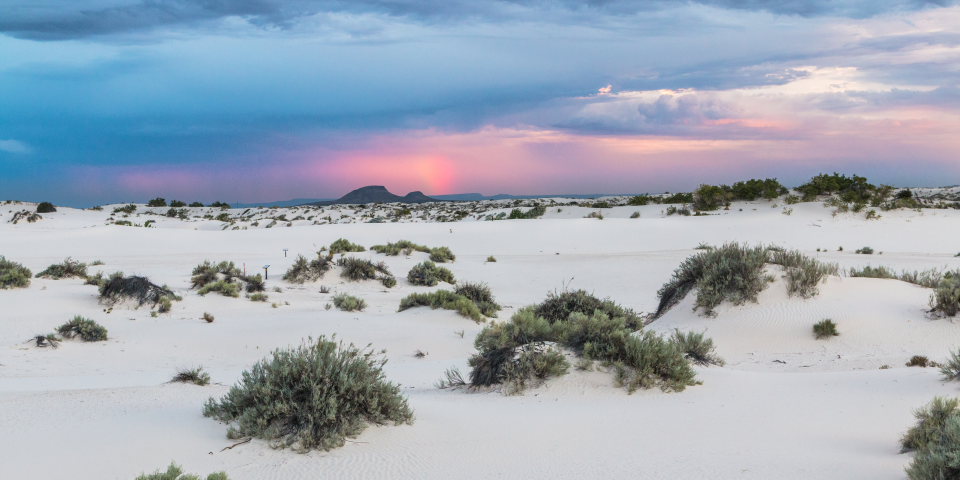
If you are currently cruising along I-10 through the vast, sun-drenched landscapes of the American Southwest, you are already witnessing some of the most rugged and beautiful terrain the United States has to offer. But tucked away in the Tularosa Basin of southern New Mexico lies a destination so surreal, so ethereal, and so visually arresting that it feels as though you’ve accidentally driven onto another planet.
Welcome to White Sands National Park.
As a traveler, you’ve likely seen your fair share of brown mountains, cacti, and desert scrub. But as you turn off the highway and head toward the park, the horizon begins to shift. The earthy tones of the Chihuahuan Desert give way to a shimmering, blindingly white expanse that stretches as far as the eye can see. It is a literal oasis of white in a sea of desert tan, and it is arguably the most “Instagrammable” spot in the entire country.
But White Sands National Park is much more than just a pretty backdrop for a photo. It is a living, breathing ecosystem, a geological anomaly, and a giant playground for the young and the young at heart. Here is why you absolutely must pull over and experience this magic for yourself.
The Magic of Gypsum: Sand Like You’ve Never Seen It
The first thing you need to know about White Sands National Park is that it isn’t made of your typical beach sand. Most sand is composed of silica (quartz), which absorbs the sun’s rays and can become scorching hot. The dunes here are made of gypsum-a soft, white mineral often used in drywall and plaster.
Gypsum is rarely found in the form of sand because it is water-soluble; usually, rain would simply dissolve it and carry it away to the sea. However, the Tularosa Basin is a “closed basin,” meaning there is no outlet to the ocean. When rain and snowmelt wash gypsum down from the surrounding San Andres and Sacramento Mountains, the water traps the mineral in the basin. When the water evaporates, it leaves behind pure selenite crystals, which the wind then breaks down into the fine, flour-like white grains that form these massive dunes.
The result? A landscape that looks like a winter wonderland but exists in the heart of the desert. Because gypsum doesn’t absorb heat, the “sand” stays cool to the touch. You can kick off your shoes and feel the silky, refreshing texture between your toes even when the thermometer hits 90 degrees.
A Playground in the Desert: What to Do

One of the best things about White Sands National Park is how interactive it is. Many National Parks are “look but don’t touch” environments, but White Sands invites you to jump right in.
1. Sledding the Dunes
This is the quintessential White Sands National Park experience. Imagine the thrill of sledding down a snowy hill, but without the freezing temperatures and heavy coats. Visitors of all ages grab plastic waxed saucers and head for the steepest dunes they can find. There is something incredibly liberating about flying down a white slope under a bright blue New Mexico sky. It’s a workout to climb back up, but the laughter echoing across the dunes makes it worth every step.
2. Driving the Dunes Drive
If you’re short on time but still want to see the heart of the park, the 16-mile round-trip Dunes Drive is perfect. The first few miles are paved, but as you get deeper into the park, the road is actually “plowed” out of the sand. Driving on the hard-packed white gypsum feels like driving through a canyon of snow. There are plenty of pull-outs along the way where you can hop out, take photos, and marvel at the way the dunes shift and change shape with the wind.
3. Hiking and Exploration
For those who want to stretch their legs after a long drive on I-10, the park offers several trails. The Interdunal Boardwalk is an easy, accessible stroll that teaches you about the resilient plants and animals that survive here. If you’re feeling adventurous, the Alkali Flat Trail takes you deep into the heart of the dunes, away from the crowds, where the only tracks in the sand are your own and those of the local kit foxes or bleached earless lizards.
The Golden Hour: A Photographer’s Dream
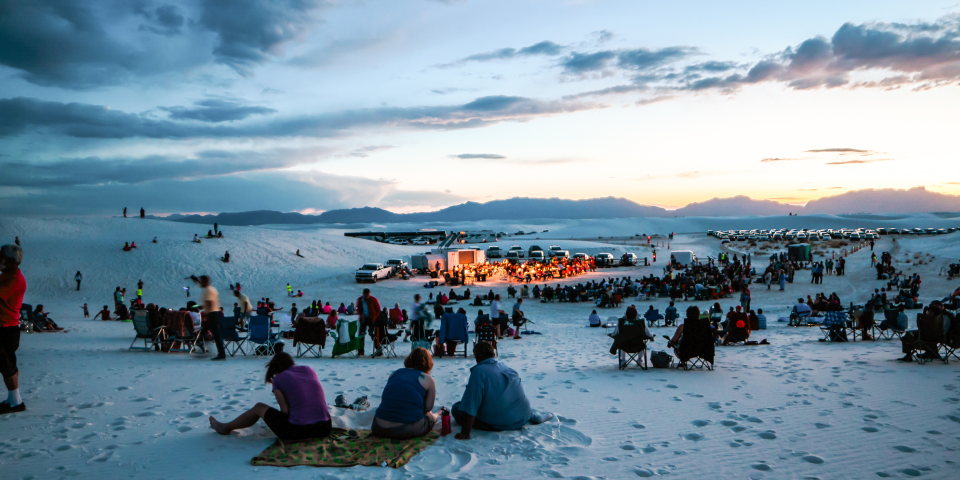
If you can time your visit for late afternoon, do it. As the sun begins to dip toward the San Andres Mountains, the white dunes transform. They catch the light in spectacular ways, turning shades of pink, lavender, orange, and gold. The shadows lengthen, highlighting the perfect, wind-swept ripples in the sand.
There is a profound silence that settles over White Sands National Park at sunset. It is a place of deep peace, where the air is still and the colors are so vibrant they almost seem fake. It’s the perfect moment to reflect on your journey and appreciate the sheer scale of the natural world.
The Resilient Life of the Sands
While it looks like a barren wasteland from a distance, White Sands National Park is teeming with life that has adapted in fascinating ways. Some species, like the Apache pocket mouse and various insects, have actually evolved to be white (or very pale) to camouflage themselves against the gypsum.
The plants are equally impressive. The Soaptree Yucca, for example, can grow its stem at an incredible rate to keep its leaves above the shifting sand. As you walk through the dunes, you’ll see these hardy plants standing tall, acting as anchors for the sand and creating “pedestals” of life amidst the white waves.
The Details
Address:
White Sands National Park Visitors Center
19955 US-70
Alamogordo, New Mexico 88310
Telephone: (575) 479-6124
Website: https://www.nps.gov/whsa/
Hours of Operation (Visitor’s Center):
Monday: 9:00 am – 5:00 pm
Tuesday: 9:00 am – 5:00 pm
Wednesday: 9:00 am – 5:00 pm
Thursday: 9:00 am – 5:00 pm
Friday: 9:00 am – 5:00 pm
Saturday: 9:00 am – 5:00 pm
Sunday: 9:00 am – 5:00 pm
White Sands National Park is open daily year-round (7:00 am – sunset) except for Thanksgiving and Christmas Day. Hours of operation vary throughout the year.
Admission:
Standard Entrance Pass: $15.00 – $25.00
Annual Entrance Pass: $45.00
Directions:
From I-10 West (Approaching from El Paso, TX): Take I-10 West towards Las Cruces, NM. After about 39 miles, take the exit onto I-25 North. Follow I-25 North for approximately 7 miles, then use the exit for US-70 East towards Alamogordo. Drive east on US-70 for about 52 miles. The White Sands National Park Visitor Center will be on your left-hand side (north side of the highway), about 1 mile past the Border Patrol checkpoint station.
From I-10 East (Approaching from Phoenix/Tucson): Stay on I-10 East past Las Cruces, NM. Take the exit for US-70 East towards Alamogordo. Continue east on US-70 for roughly 52 miles. The White Sands National Park Visitor Center is located on your left-hand side (north side of the road), about 1 mile past the Border Patrol checkpoint.
Why It’s the Perfect I-10 Stop
As a tourist on I-10, your schedule is likely packed, but White Sands National Park is incredibly “stop-friendly.” Located just about an hour north of Las Cruces, it’s a manageable detour that offers a massive “bang for your buck.” You can spend two hours here and feel like you’ve had a life-changing experience, or you can spend a whole day and still feel like you haven’t seen it all.
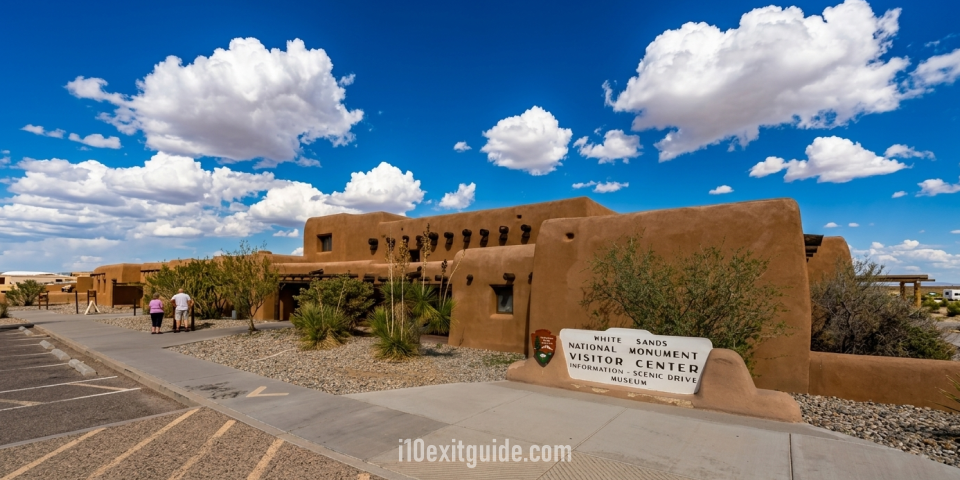
White Sands National Park is well-equipped with a beautiful visitor center (built in the historic Pueblo Adobe style), a gift shop where you can buy or rent sleds, and shaded picnic areas that look like something out of a 1960s sci-fi movie. It’s the perfect place to have a lunch break that you’ll actually remember.
Insider Tips for Your Visit
- Check the Missile Range Schedule: Because the park is completely surrounded by the White Sands Missile Range, the main road (US-70) and the park itself can occasionally close for up to three hours during missile tests. Always check the park’s official website or call the visitor center the morning of your trip to ensure the gates will be open.
- Wax Your Sled for Maximum Speed: If you plan on sledding, the gypsum sand is much higher friction than snow. To actually slide, you must apply a thick layer of plastic-safe wax (sold at the gift shop) to the bottom of your saucer; otherwise, you’ll find yourself scooting down the hill manually!
- Navigate by the Posts, Not Your Footprints: When hiking deep into the dunes, the wind can erase your footprints in minutes, making it easy to lose your bearings in the repetitive landscape. Always keep the next trail marker post in your line of sight, and never hike if you see a dust storm or heavy winds approaching.
Final Thoughts
Traveling the I-10 corridor is an iconic American road trip, but it can sometimes feel like a marathon of pavement and heat. White Sands National Park is the ultimate “reset button.” It is a place that defies logic-a cool, white, shimmering sea in the middle of a desert.
Whether you are traveling solo, with a partner, or with a car full of restless kids, White Sands National Park offers a sense of wonder that is rare in this world. It’s a place where you can be a scientist, an athlete, an artist, or a child again, all within the span of a few miles.
So, when you see those signs for Alamogordo or Las Cruces, don’t just keep driving. Take the turn. Step out onto the cool, white sand. Breathe in the mountain air and look out over the vast, undulating waves of gypsum. You’ll leave with sand in your shoes, but you’ll also leave with memories of one of the most beautiful places on Earth. Safe travels, and enjoy the dunes!
The I-10 Exit Guide is the Internet’s largest and most complete website dedicated to Interstate 10 travelers. Find detailed exit service listings… lodging, camping, food, gas and more for every exit from California to Florida!
On the road? Why not take us with you. The I-10 Exit Guide is mobile-friendly and totally FREE. No App Required.
Traveling another route? Visit our growing family of exit guides: I-4 Exit Guide, I-5 Exit Guide, I-10 Exit Guide, I-75 Exit Guide, I-80 Exit Guide and I-95 Exit Guide. Detailed exit service listings… discount lodging, camping, food, gas and more for every exit along the way!